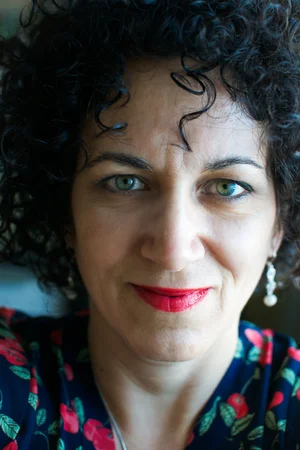
How I Learned to Ride the Machine
My sister asked me once, mid-conversation, whether I had written something myself. Not accusingly — just genuinely curious, the way someone asks when they notice something has shifted. I had to think about it. The ideas were mine. The experience was mine. The argument I’d been turning over for months was mine. But I had spoken it first, into my phone, walking through my neighbourhood, and something else had helped me find the shape of it.
I’ve been a teacher for thirty-three years. I know what it means to do the work — the slow, expensive kind, where you sit with an idea long enough that it starts to tell you what it needs. I used to write essays the way I was taught: gather the material, find the quotes, build the outline, draft and revise until the language finally did what I wanted it to do. It took hours. Sometimes days. And I was proud of that. The difficulty felt like proof of something.
What I’ve learned over the past year is that the difficulty was sometimes proof, and sometimes just friction. The ideas don’t get better because they cost more time. They get better because you follow them honestly, wherever they lead, with whatever tools help you stay on the horse.
I grew up poor, in a small rural community, raised by parents who believed, in their own way, that the world beyond their three acres was more dangerous than the one they could see and touch. If I wanted a book, someone had to drive me to the library. If no one could, I read the same ones again. Access to knowledge was rationed by geography and circumstance, and I understood early that the distance between where I was and where I wanted to go was going to require something relentless from me.
Education was my way out. I became a teacher because of that. And for thirty-three years I watched what happened to kids who were given access to tools and shown how to use them — and what happened to kids who weren’t.
I taught entrepreneurship for a year. Not because it was my favourite class, but because I believe it should be mandatory. We tell students we’re preparing them for the world. We prepare them for college applications. We teach them to write essays and solve equations and memorize dates. And then we send them out into an economy that will ask them to pivot, adapt, freelance, rebuild, start over — sometimes more than once — without ever having walked them through what that actually looks like.
An entrepreneurship class isn’t a business class. It’s a resilience class. And to me, taking an idea from nothing — naming it, building it, risking something on it, standing up and pitching it to a room — that is the ultimate creative act. It is also the ultimate act of believing in yourself. Once you’ve done it once, you have the map. You can repivot. You can build a second income stream, a third. You can buffer yourself against the winds of change rather than simply hoping they don’t come.
They always come.
I had a room full of students, never quite enough laptops, and a year to walk them through the entire arc — idea generation, market research, naming, branding, website, business plan, pitch. We used every tool available, including ChatGPT, which I treated the way I treat any powerful instrument: here’s what it does, here’s what it doesn’t do, here’s how you stay in charge of it. The horse carries you, I told them. But you have to learn to ride.
Many of them had never used Canva. Some had never built anything digital before. They couldn’t use their phones at school, so they worked with what we had and figured out the rest. Ten groups. They didn’t have to start a real business. That wasn’t the point. But four of them did anyway. Real ones, with customers. The other six left with something equally valuable: they had walked the whole process once. If they ever lost a job, faced a pivot, needed to start over, they would not be starting from zero.
My youngest daughter built a dog grooming business. She spent a year in college, worked for someone else and watched everything they did, asked herself what she’d do differently — and then she built it. She’s making a life. It isn’t always easy, but she has the map. Most kids don’t get that map from their families. That’s what the class was for. How to register a domain name. How to research your competition. How to price your work. How to pitch your idea to a room without your voice shaking. Small things that feel enormous when nobody has ever shown you.
I showed my students the businesses I was building. Not as a lesson plan — as proof. Here is what it looks like when an adult you know takes an idea and makes something of it. Here is what agency looks like in practice. When my own life changed — and it did, the way lives do — it was that same knowledge that steadied me. A photography business. A second income. Not a backup plan exactly, more like a second floor. Something to stand on when the ground shifts beneath the first one.
Then came the ban. ChatGPT in classrooms — gone. The concerns are partly legitimate: student data privacy is real, and no one wants a child’s records fed into a third-party server without consent. But the practical result is a blanket prohibition, for students and teachers alike, with a fifty-thousand-dollar fine attached. I am not exaggerating that number.
The fine applies to school-issued devices. It doesn’t follow anyone home. Make of that what you will.
Those students are using these tools anyway. Everyone is. The only question is whether anyone is teaching them how.
The post that started this essay came after someone looked at how the sentences were arranged and decided the thinking wasn’t real. The lines were short. Fragmented. AI formats for phone screens — breaks ideas into pieces easier to scroll. I’d left it that way because the argument was complex, the evidence was real, and I had spent everything I had. A farmer had reached out with a genuine concern. I had a representative’s letter in hand. I made the clearest argument I could, as fast as I needed to, and put the proof in the comments.
Someone dismissed the format. The farmer got a useful response.
Just because something looks like AI doesn’t mean the ideas don’t matter. And if you’re going to dismiss everything touched by a new tool, you’d better be consistent about it. There are photographers who said digital wasn’t real photography. They said it for years, with great conviction, while the rest of us kept making images.
I still write field notes from beginning to end with a fountain pen. I still sit down with a keyboard when the essay asks for that kind of quiet. And I talk through ideas out loud, into my phone, walking through Québec City, because that’s how I think — and I’ve stopped apologizing for it.
The ideas are mine. The experience is mine. The judgment is mine.
The tool just helps me stay on the horse.