Prefer to listen?
This essay was written to be read slowly. If you’d like, begin by listening to it in my own voice.
🎧 Listen to “How I See the World”
Or simply continue reading.
In this recording, I r3ead How I See the World in my own voice. Sometimes a story is best heard before it’s read.
How I See the World
Yesterday was my first day of summer.
After months of teaching, grading, creating, and moving from one responsibility to the next, I finally had time to wander. I found myself walking along Avenue Cartier and stopped to visit a florist I’ve known for several years. We’ve crossed paths in different ways over time. I photographed her little flower shop years ago. She’s created flowers for our school’s prom. Sometimes I simply stop in to say hello. Like many of the relationships that matter most, ours has grown quietly.
She was upstairs arranging flowers for a funeral.
The bouquet was for a woman who had lived to be 108 years old.
“I’m going to miss her,” she said.
Then she smiled.
“But don’t be sad. She was ready.”
We stood there talking for a long time. About living. About dying. About reaching a moment when someone can honestly say, “I’ve had a full life.” Her friend had wanted medical assistance in dying, but because she was still physically healthy, she didn’t qualify. Eventually, she chose to stop eating. It was simply her way of saying that her journey felt complete.
As I walked home, I couldn’t stop thinking about her.
One hundred and eight years.
Imagine everything she had witnessed. She was born into a world that looked almost nothing like ours. Horses gave way to airplanes. Radios became televisions, then computers, then phones we carry in our pockets. Artificial intelligence arrived before she left. The world transformed again and again around her.
But somehow that wasn’t what stayed with me. What stayed with me was the quieter question. What makes a life feel complete? As I walked, one thought led naturally to another, the way it often does. The woman became curiosity. Curiosity became art. Art became children drawing without worrying whether what they were making was good. Those children became my students.
Then I found myself thinking about Vivian Maier, who spent a lifetime quietly photographing the world without knowing that millions of people would one day see her work. I thought about the conversations I’d had over the years about whether art needs meaning, whether technique matters more than honesty, whether something created in play can be just as true as something carefully planned.
By the time I reached home, I wasn’t thinking about a florist anymore. I was thinking about the way I see the world.
The older I get, the more I find myself returning to children. Not because they know more than adults, but because they haven’t yet learned to be afraid of beginning. Give a three-year-old a handful of crayons and they don’t ask whether they’re an artist. They simply draw.
I’ve watched students spend an hour trying to make something perfect, and I’ve watched another student discover something extraordinary simply by experimenting. Sometimes a painting carries years of emotion. Sometimes the most beautiful moment is an accident no one could have planned.
I suppose that’s why I’ve never believed creativity belongs only to people with extraordinary talent. It belongs to anyone willing to remain curious. Perhaps that’s what I admire most in people as they grow older. Not accomplishment. Not recognition.
Curiosity. The willingness to keep asking questions. To keep beginning again. To allow yourself to shed old ways of seeing the world so that something new has room to appear.
People sometimes ask how I see the world.
The honest answer is that my mind is always changing focal length.
Sometimes I find myself completely absorbed by a single conversation in a flower shop or the way light falls across a table. Sometimes I stop to photograph a tiny insect on a leaf, or a shell half buried in the sand. Other times I look up and notice a person standing almost invisibly within an immense landscape.
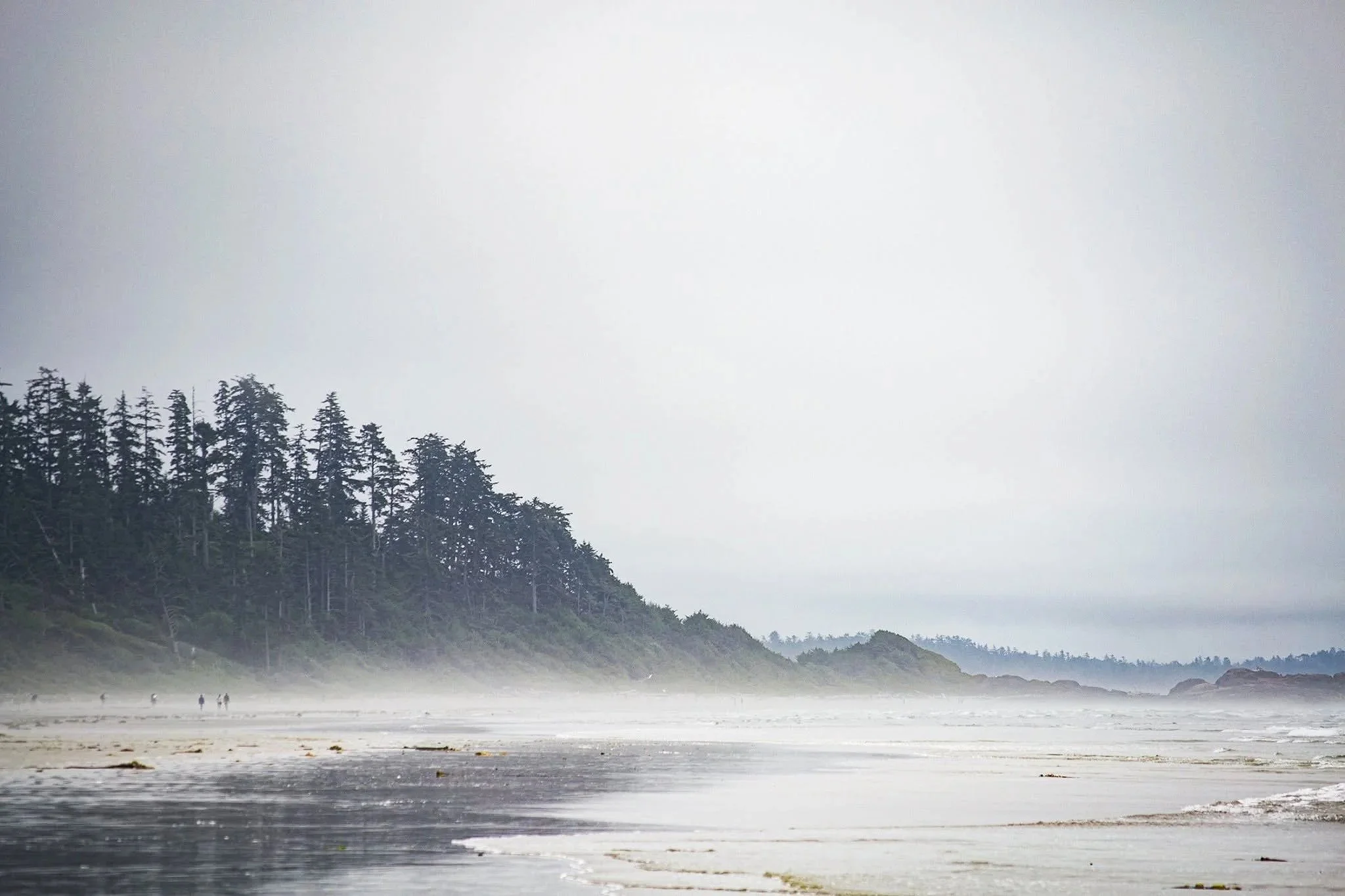
I’ve realized over the years that I photograph people that way quite often. Tiny human beings. Big landscapes. Not because I think we’re insignificant, but because I think we belong.
We’re part of the landscape, not separate from it.
Then my mind zooms out even further.
Far enough that borders begin to feel like lines we’ve drawn together. Far enough that civilizations become chapters in a much longer story. Far enough that I remember we’re here for such a brief moment.
A snowflake moment.
Strangely, that thought has never made me feel small.
It has always made me feel connected.
Whether someone understands that through faith, through nature, through science, or through something else entirely doesn’t matter very much to me. I simply experience life as something larger than myself. Like one thread woven into an enormous quilt that generations have been stitching together for thousands of years.
Some seams hold. Others tear. New patches are added. Old ones wear thin. The quilt keeps growing. Perhaps that’s why death has never frightened me as much as losing my curiosity. Everything in nature changes form. Water becomes vapour. Clouds become rain. Rivers become oceans.
Nothing stays exactly as it was.
If I am fortunate enough to reach one hundred years old, I hope I will still be walking.
Still noticing.
Still asking questions.
Perhaps that’s why this space exists. Not because I have answers. Quite the opposite. It’s simply a place where I can continue paying attention. Some days that happens through photography. Other days through a conversation with someone I’ve just met.
Sometimes it becomes an essay. Sometimes it remains nothing more than a memory I carry with me for years. Every now and then, those memories find one another, and a pattern begins to appear.
That’s what The Leeça Space has become.
Not a collection of projects, but a collection of moments that gradually began speaking to one another.
The essays.
The photographs.
The conversations.
The voices.
The field notes that started them all.
None of them were ever meant to stand alone. Together they are becoming something much closer to a quilt. No single square tells the whole story. But if you step back far enough, perhaps the pattern begins to emerge.
If there is one hope I have for this space, it isn’t that anyone will agree with me. It’s simply that, after spending a little time here, you might walk a little more slowly. Notice something you would have passed yesterday. Become curious about someone whose story you don’t yet know.
Because I don’t believe life is something to conquer.
I think it’s something to notice.
Everything you’ll find here grows from that simple belief.
Welcome.
Enter where you wish.