Sometimes I find myself wanting to shut out the world and concentrate on my own little life. I can spend my days making art, reading, walking, and enjoying the small pleasures of everyday life. And periodically, that’s exactly what I do. There is something comforting about stepping away from the constant noise of politics and world events, especially when so much of it feels beyond my control.
But I can never quite turn away completely. I think about my daughters, my female students, and the generations of women who will come after us. I think about the freedoms I’ve enjoyed throughout my life, freedoms that other women fought hard to secure and that I sometimes take for granted. And I wonder what responsibility comes with having a voice in a society where I’m free to use it. Surely those of us who have lived long enough to witness both progress and setbacks have something to contribute. We don’t have to understand every political issue or have all the answers, but I don’t think we can afford to become complacent.
Perhaps that’s why I’ve been thinking so much about the conversations I used to have with my students when I taught John Steinbeck’s Of Mice and Men. Some of my favourite classroom discussions grew out of examining the power structures within the little society he created. We looked at race, gender, disability, economic circumstances, and the relationships between workers and those who employed them. What fascinated me was how quickly students began making connections once they understood what they were looking for. Young people are remarkably perceptive when given the opportunity to think for themselves.
Crooks, the Black stable hand, lived apart from the other men because of his race. Candy feared losing his place on the ranch because he was old and disabled. Lennie was vulnerable because of his intellectual disability, while Curley’s wife, the only woman on the ranch, wasn’t even given a name of her own. Then there were the working men, the boss, and Curley, whose position as the boss’s son gave him authority he hadn’t necessarily earned. Within a relatively small group of characters, Steinbeck had managed to illustrate an entire social hierarchy.
What made those discussions particularly interesting was that the hierarchy wasn’t entirely straightforward. Curley’s wife, for example, had very little power in a society dominated by men, yet she could threaten Crooks by drawing on the racism of the time. Someone who was marginalized could still exercise power over someone more vulnerable. My students understood that contradiction. They could see how people sometimes protected their own position by reminding someone else of theirs.
Those lessons feel particularly relevant today. I teach art now, but I see students arriving at school carrying copies of Elie Wiesel’s Night. They’re studying the Holocaust, the rise of Nazism, and the systematic persecution of people who were gradually stripped of their rights and, ultimately, their lives. I wonder what they’re thinking when they look at contemporary events, particularly the images and reports of immigration raids and detention in the United States. I’m sure some of them are making connections of their own.
Of course, we have to be careful with historical comparisons. The Holocaust was a genocide, and contemporary American immigration enforcement is not the same thing. But studying history isn’t simply about memorizing events and dates. It’s about understanding how societies function, how power becomes concentrated, and how ordinary people come to accept things that might once have seemed unthinkable. We can examine those processes without claiming that every historical situation is equivalent.
What concerns me is how quickly our understanding of what is possible can change. I recently came across the story of Madolline Gourley, an Australian woman travelling to Montreal in 2022. During a stopover in Los Angeles, she was detained by American immigration officials who were concerned about her plans to house-sit in Canada. According to her account, she was questioned about whether she was pregnant and whether she had recently had an abortion. The authorities subsequently defended such questioning as part of their medical procedures for people in custody. This happened only days after the American Supreme Court overturned Roe v. Wade. I found the story deeply unsettling. Why should a woman travelling through an airport have to answer questions about her reproductive history? And how did we arrive at a point where such questions could be considered an ordinary part of an immigration procedure?
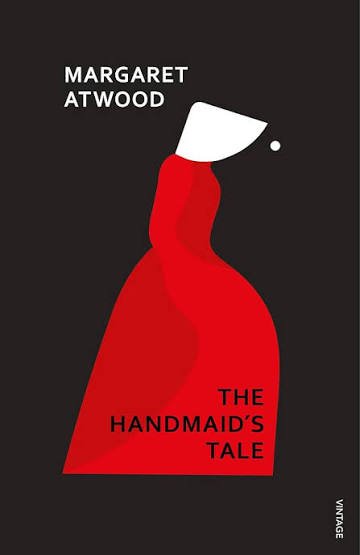
It brought Margaret Atwood’s The Handmaid’s Tale to mind. I remember reading that novel as a warning about the fragility of women’s rights and the dangers of allowing religious and political authority to determine what women could do with their own bodies. Following the reversal of Roe v. Wade in 2022, reproductive rights in the United States became increasingly dependent on where a woman lived. Something that had been protected under federal constitutional law for nearly fifty years was no longer guaranteed in the same way.
And then I began thinking about the economic reality of raising a child. If a woman has limited access to reproductive healthcare, what happens when she cannot afford to raise a child? The American federal minimum wage is still $7.25 an hour, although many states have established higher rates. There is no universal federal guarantee of paid maternity leave, and childcare can be extraordinarily expensive. Housing, groceries, transportation, and healthcare all place additional demands on families. What does freedom of choice really mean when someone has so few practical choices available?
This is where I find myself returning to Steinbeck. We tend to discuss rights as though everyone experiences them in the same way, but economic circumstances can determine whether a person is actually able to exercise those rights. A woman with financial resources may be able to travel for medical care, take time away from work, or arrange childcare. Someone living from one paycheque to the next may have none of those options. The law may apply to both, but its consequences are not necessarily equal.
I also think about the way restrictions on freedom are often discussed in isolation. Immigration is one debate, reproductive rights another, and economic inequality yet another. But the people affected by these decisions don’t experience their lives in separate political categories. A woman may also be an immigrant, a single parent, a low-wage worker, or someone living with a disability. The different forms of vulnerability overlap, just as they did among Steinbeck’s characters.
Perhaps that is why I find the current political climate so unsettling. We tend to assume that the freedoms we’ve grown up with are permanent, particularly when we live in established democracies. We expect our institutions to protect us, our courts to remain independent, and our governments to respect certain boundaries. Sometimes those expectations are justified, but history offers plenty of examples of societies in which people discovered that their protections were not as secure as they believed.
I don’t think the lesson is that we should live in constant fear. Nor do I believe that every political disagreement represents a threat to democracy. But I do think we should pay attention when the rights of particular groups become negotiable, especially when those groups have relatively little political or economic power.
My students understood something about that when we read Of Mice and Men. They recognized that the treatment of the most vulnerable people revealed a great deal about the society around them. They didn’t need me to tell them what conclusion to reach. They simply needed enough context to begin asking questions.
And lately, I’ve found myself asking some of those same questions, not only about the United States, but about countries whose citizens live with restrictions that most of us can scarcely imagine.
How much freedom do we really take for granted? And how much do we know about the people who have never experienced the freedoms we consider ordinary?