This is Not the Conservatism I Knew
Twenty-One Days
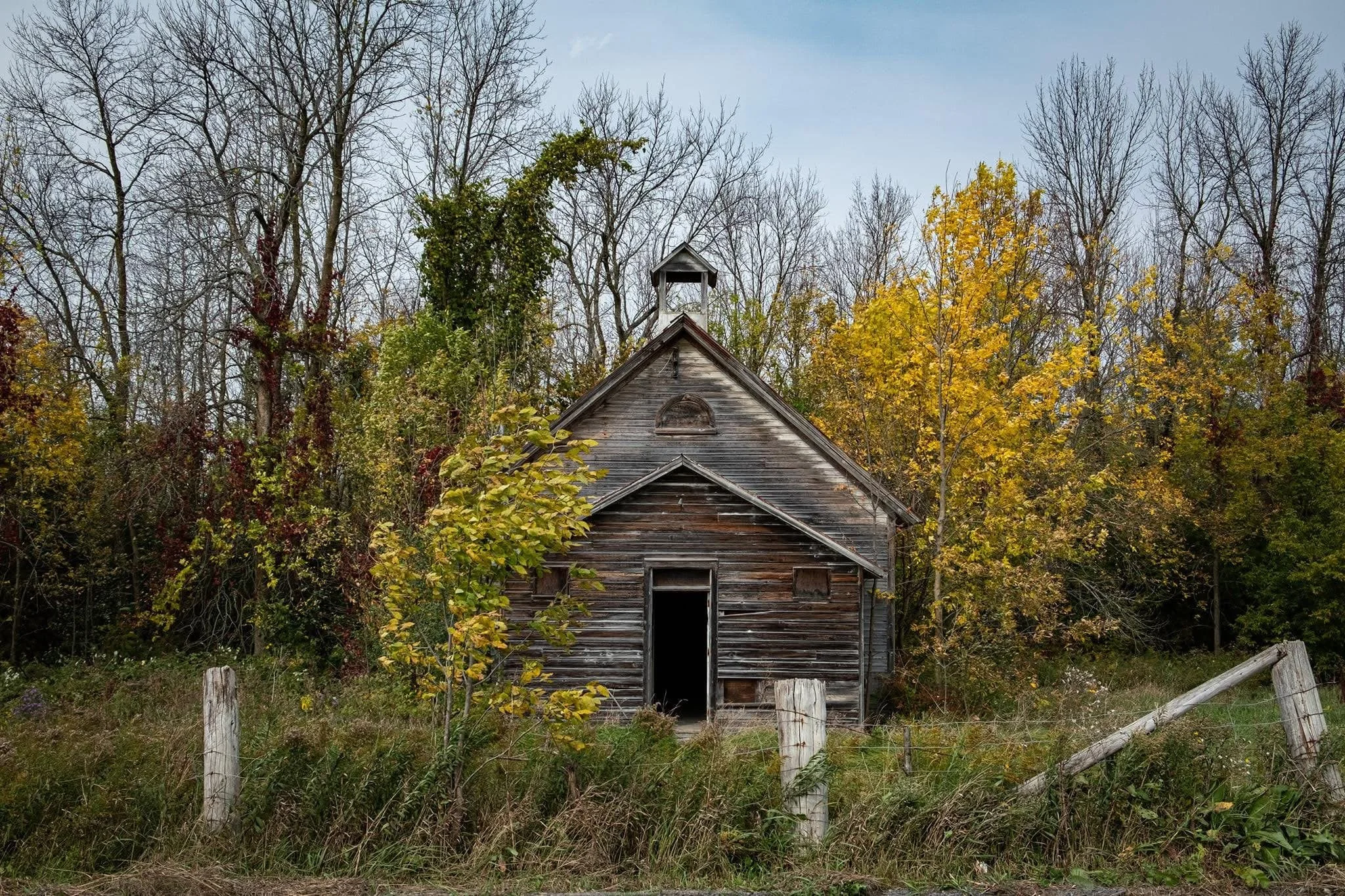
I grew up in rural Eastern Ontario, surrounded by farmers, hunters and fishermen. It would be difficult to find a more traditionally conservative environment.
But conservatism, as I knew it, was not merely a political position. It was a way of living together.
People believed in working hard, taking responsibility for themselves and respecting the land that sustained them. They did not want unnecessary government interference in their farms, businesses or private lives.
But they also understood that independence did not mean leaving people to fend for themselves.
I saw that clearly during the ice storm of 1998.
At the time, I lived with my husband and our two very young children at the dead end of Concession Four, outside Riceville, Ontario. There were only four houses on our little stretch of road. When the ice storm came, we were among the last to have our electricity restored.
The trees came down. Hydro lines collapsed. Roads became impassable. Everything was covered in ice.
Farmers urgently needed generators because they had animals that had to be fed, watered and kept alive. After that, lists were made. Community centres opened. Food was prepared. Generators were shared and brought wherever electricity was most urgently needed.
People went from house to house, knocking on doors. They checked especially on older people and anyone who might be vulnerable.
We waited 21 days for our electricity to return. Twenty-one days without power in the middle of January, with two babies in the house.
But the community pulled together.
That was not unusual. When someone’s house burned down, people pitched in. If a family was struggling, neighbours found ways to help. It was understood that when something happened to one person, the rest of the community had a responsibility to respond.
There was a similar understanding around the land. People frequently allowed others to cross or use their property, but that access depended upon respect for crops, animals, fences and private spaces.
The land might belong to one person, but people understood that they existed within a larger community of relationships and obligations.
The Community That Raised Me
I was a poor English child growing up in a French Catholic world. But I attended a small, traditional Catholic school where the teachers cared about me. They encouraged me, recognized something in me and helped make sure I went to university.
Later, I married into the francophone community, raised my children there and taught there for many years.
The parents of my students worked hard, and they respected hard work in others. They knew that I expected a great deal from their children and wanted what was best for them. Even though I was English in a French community, they trusted me.
Over many years of teaching, I had some of my best conversations with groups of country boys. They were curious. They knew things about land, machinery, animals and work that I did not know.
When I brought research into the classroom, they did not need it handed down as a verdict. They engaged with it, compared it with what they had seen and brought perspectives the research did not always capture.
Intelligence does not belong to one political position, one profession or one kind of education. Formal research and lived experience can enlarge one another when people are treated as though their knowledge matters.
We disagreed, sometimes profoundly.
But we could still have a conversation.
I Do Not Romanticize It
None of this means that I romanticize the communities where I lived.
There was a redneck strain of conservatism that I did not like. There were prejudices, resistance to change and attitudes toward women that could be limiting.
I do not agree with Doug Ford’s approach to public education and healthcare, particularly the tendency to impose sweeping changes from above without giving enough weight to the teachers, nurses, doctors and other professionals who understand those systems from within.
But those were still my people.
I knew them as neighbours, parents, farmers, teachers, small-business owners and community volunteers. For the most part, they treated me with respect, even when our politics were very far apart.
Disagreement did not erase belonging.
Performing the Symbols
Those communities are now under real pressure. People can work as hard as their parents did and still be unable to build the same security. Traditional institutions have weakened. Social expectations have changed quickly. Many feel that their way of life is disappearing and that the larger culture regards them with contempt.
That loss is real, even when we disagree with the politics that can grow from it.
This is where political movements intervene.
A leader who promises to restore order is offering more than policy. He offers an explanation for the anxiety. He says something valuable was taken, identifies an enemy and promises to restore people’s place.
Donald Trump has understood how to exploit those pressures.
He does not live according to the traditional values he claims to defend. His public life is built around wealth, status, spectacle and personal power. His treatment of women, disabled people, veterans and political opponents bears little resemblance to humility, fidelity, service or compassion.
He does not embody traditional values.
He performs their symbols.
The performance works because many supporters are not choosing Trump as a moral example. They are choosing him as a weapon against a culture they believe has rejected them. He offers recognition, retaliation and the promise that an older order can be restored.
Progressive culture has sometimes helped create that opening. Social changes expanded freedom for people who had previously been excluded. That matters.
But some people heard more than “Society is changing.”
They heard, “People like you are backward, ignorant and morally suspect.”
If we want people to reconsider an idea, we cannot make their humiliation the admission price for entering the conversation.
But replacing one form of contempt with another is not a restoration of values.
The Conservatism I Knew
The conservatism I knew valued independence, but it also understood obligation.
It respected private property, but it recognized that land carried responsibilities.
It valued hard work, but it did not believe that people in trouble should simply be abandoned.
It was imperfect. Some traditions provided belonging, continuity and mutual responsibility. Others limited who was permitted to lead, whose knowledge was respected and whose voice carried authority.
We should preserve the first without defending the second.
The men I knew understood protection as responsibility. When something went wrong, they did not need an enemy to punish. They looked for the neighbour who needed help.
Protection is not aggression. Strength is not humiliation. Defending a community means caring for the people within it.
Trump has made cruelty appear courageous and belligerence appear honest. Because progressive culture sometimes treated traditional people with contempt, he was able to sell contempt in the opposite direction as a form of liberation.
That is not the conservatism I knew.
The people I knew could be stubborn. They did not always agree with me, and I did not always agree with them.
But when the ice came down and the roads disappeared, they knocked on one another’s doors.
They checked on the old people.
They fed their neighbours.
They understood that freedom did not release them from responsibility for the people around them.
That is worth remembering.
And it is worth protecting.