Field Note: Coming Home
One of the things I’ve come to love about Newfoundland is how easily conversations begin.
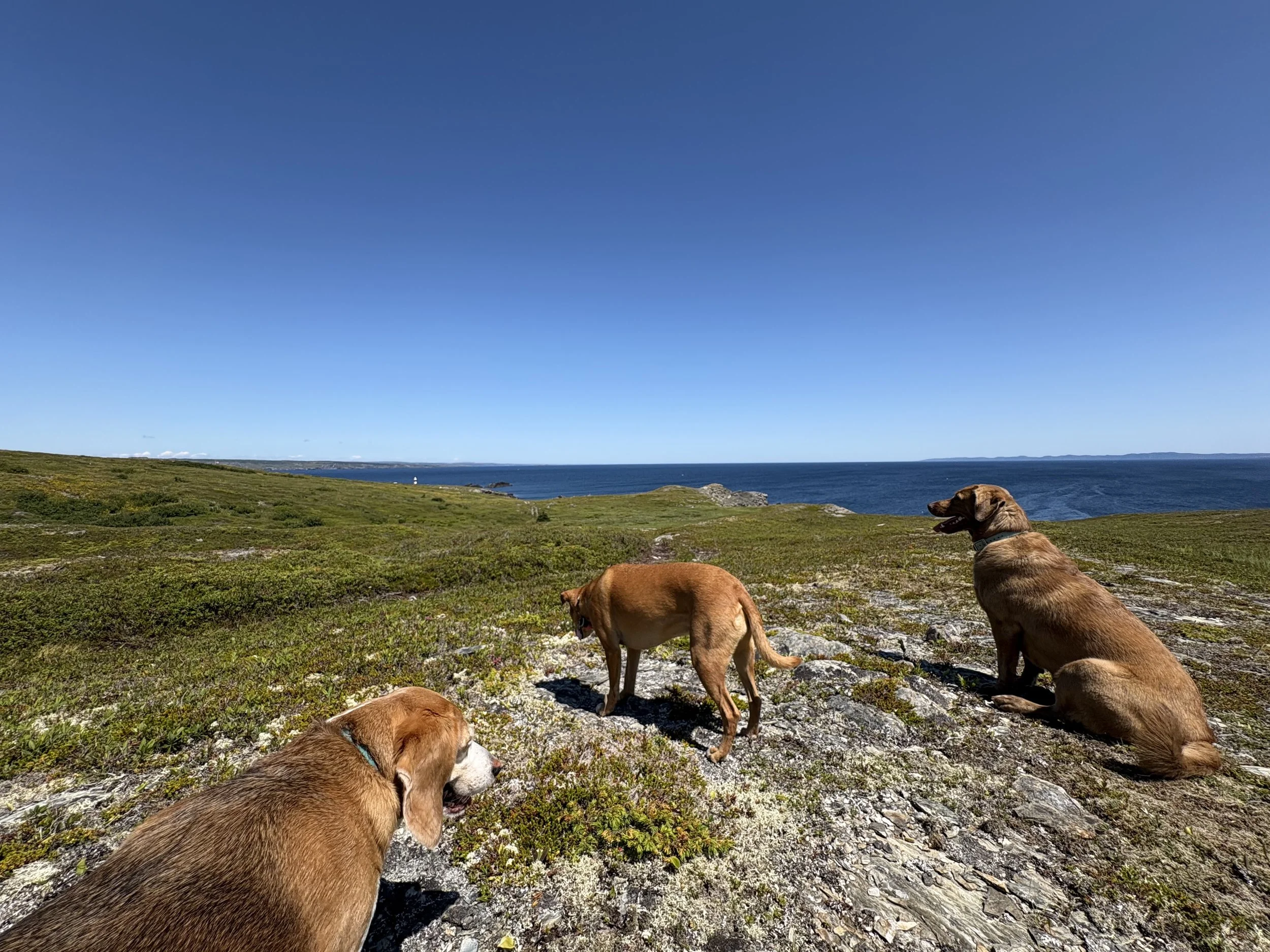
I was out hiking again today, the dogs racing ahead along the trail, when a gentleman in his early seventies stopped to say hello. Around here, that’s not unusual. People pause. They chat. They ask about the dogs. Before long, strangers are exchanging stories as though they’ve known each other for years.
He was there with his daughter, his grandson, and his granddaughter, enjoying a summer day together.
His daughter mentioned she was visiting from Ontario.
“I’m from Ontario too,” I replied.
That was all it took.
He spent much of his working life on pipeline projects. The work provided for his family, but it came at a cost. For five or six months each year, he was away from home. It wasn’t the kind of job you simply left at the end of the day.
We talked about raising children during those years. Childcare was so expensive that it made little financial sense for both parents to work. His wife stayed home to care for their four children while he travelled wherever the work took him.
There was no bitterness in the way he told the story. Just the quiet matter-of-factness that comes from looking back on a life shaped by practical decisions and a commitment to providing for the people you love.
Years later, he returned to Newfoundland.
Not because the work was here, but because his parents were getting older. Home had begun calling him back.
Now his daughter makes the journey in the opposite direction, travelling from Ontario to visit her father, while her own children explore the trails, laugh with the dogs, and create memories of this place.
As I continued my hike, I found myself thinking less about pipelines than about family.
We often debate industries, economies, and politics as though they’re abstract ideas. But behind every headline are ordinary people making difficult choices with the opportunities available to them—trying to earn a living, raise children, care for aging parents, and, eventually, find their way home again.
Sometimes the most meaningful conversations aren’t about taking sides.
They’re about understanding the lives that exist between them.