Which Freedoms Are Americans Learning to Live Without?
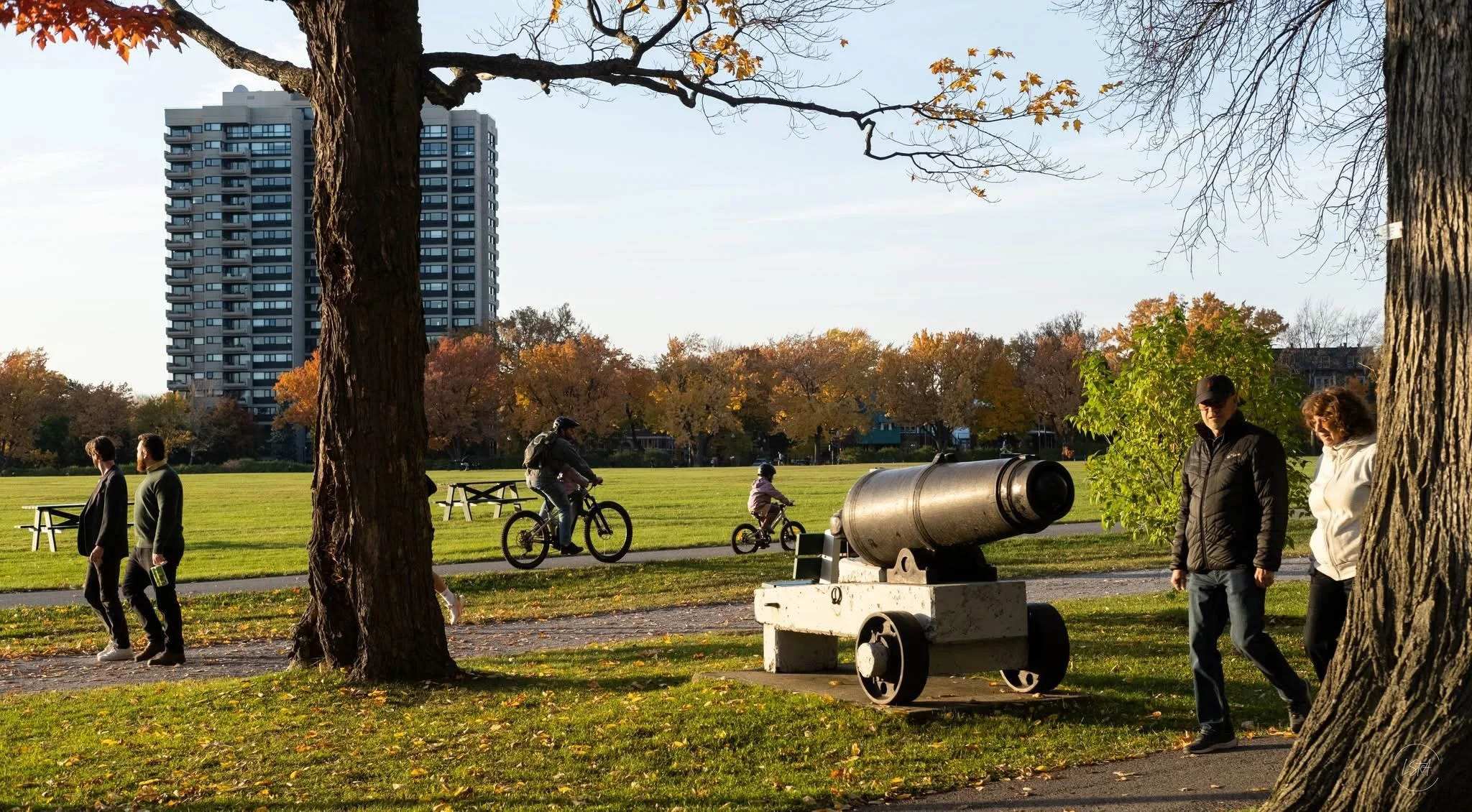
I was walking across the Plains of Abraham in Québec City on a beautiful late-summer afternoon.
American revolutionary forces once camped on this ground during their failed invasion of Canada.
People sat in a circle doing yoga. Children filled the playground while their parents pushed them on swings. Others cycled, walked, rollerbladed or read beneath the trees. People from many cultures occupied the same public space without appearing afraid of one another.
None of it was dramatic.
That was precisely the point.
This was what a functioning society looked like.
I tried to imagine the same park patrolled by masked, visibly armed immigration agents. I imagined some families wondering whether they might be stopped, questioned or misidentified. Nothing about the trees or pathways would change. Everything about the country would.
We often think freedom disappears in one terrible moment. A government cancels an election. A newspaper is closed. A political opponent is arrested.
Sometimes that happens.
More often, freedom disappears by degrees.
People begin changing how they speak. They reconsider where they go and whether it is safe to be seen at a protest. Journalists wonder whether doing their jobs will make them targets. Institutions comply because resistance seems costly and each individual compromise still appears survivable.
Life continues. Children go to school. People buy groceries. Cafés remain open. Meanwhile, masked agents take frightened people from their homes. Most people continue to feel free, particularly if they are secure, white, citizens and politically quiet.
That unevenness is part of how the process works. The machinery reaches immigrants, racialized communities, protesters and journalists first, allowing everyone else to believe it will never reach them.
Russia did not become today’s Russia overnight.
Vladimir Putin did not need every Russian to demand dictatorship. He needed supporters to be rewarded, opponents to be frightened and everyone else to become sufficiently exhausted or convinced that resistance belonged to someone else.
Elections did not disappear immediately. Neither did journalism, political opposition or public criticism. They were weakened progressively. Independent media outlets were pressured or closed. Critics were pushed into exile, disqualified or imprisoned. Laws made dissent more dangerous. Propaganda did not need to persuade everyone. It only needed to create enough confusion, fear and accommodation for power to keep moving in one direction.
Human Rights Watch reports that Russia’s number of political prisoners rose to 1,217 by the end of 2025. At least 1,299 people had faced criminal prosecution for opposing the war.
Authoritarianism does not require universal belief. It requires enough people to become frightened, distracted, rewarded or resigned.
The United States is not Russia.
Its history and institutions are different. Elections remain competitive. Courts still rule against the government. State governments hold substantial power. Independent journalists continue to report. Americans organize, protest, challenge government action and prepare to vote.
Those differences are real, and they matter. But they should not become excuses for refusing to recognize progression.
The 2026 report from the V-Dem Institute says the current global wave of autocratization has reached the United States. Researchers at the Carnegie Endowment have identified familiar patterns: attacks on independent institutions, efforts to expand executive power and the use of government against perceived enemies.
That trajectory is not inevitable. But it deserves our attention.
We can already see Americans changing their behaviour because they fear the state. Lawsuits brought by citizens, journalists and protesters describe racial profiling, warrantless arrests and retaliation against people documenting immigration enforcement. Courts are still hearing those cases. That is evidence that democratic protections remain. It is also evidence that they are being tested.
In July 2026, Immigration and Customs Enforcement held more than 65,000 people in detention. More than seventy per cent had no criminal conviction. Many had no government-appointed lawyer because immigration proceedings do not provide the same right to counsel as criminal trials.
A country does not have to call people prisoners in order to imprison them.
The White House demanded 3,000 immigration arrests a day, enough to take more than one million people into custody each year. Law enforcement is supposed to begin with an offence and search for the person responsible. An arrest quota begins with a number and sends agents out to find enough people to meet it.
Most American prisons are publicly operated, but immigration detention is overwhelmingly carried out through private facilities and contractors. Congress supplies billions of dollars. Corporations supply the beds. Human confinement becomes an industry.
The fear does not remain inside detention centres. ICE accepts anonymous public reports about suspected immigration violations. Neighbours can report neighbours. Employers can threaten workers. Personal grievances can acquire the force of government.
A surveillance state does not need to watch everyone directly. It teaches people to watch one another.
So what could another three years produce?
Not necessarily a fully consolidated dictatorship. That is not the only danger.
Elections might continue but become less fair. Opposition parties might remain legal while facing unequal legal, financial and media pressure.
Trump has already fired the chairman of the Joint Chiefs of Staff and pushed out five other senior military leaders. In June 2026, he transferred roughly 8,000 policy-influencing federal positions into a category that stripped away key job protections and made those employees easier to dismiss. The project of replacing professional independence with personal loyalty is already underway.
Courts are already struggling to restrain him. During the first fifteen months of Trump’s second term, judges concluded that his administration had violated court orders in at least thirty-one lawsuits. More than 250 additional instances of noncompliance were identified in individual immigration cases.
Courts can issue rulings, but they cannot execute those rulings alone. Their authority depends upon officials willing to obey and institutions willing to defend constitutional limits. After three more years of consolidating personal loyalty, who will remain inside the government to make those rulings matter? Detention and deportation could become normalized instruments of fear. People could censor themselves without free speech ever being formally abolished.
The machinery of democracy could remain visible while becoming steadily more difficult to use against those in power.
This is sometimes called competitive authoritarianism: elections, opposition and newspapers remain, but the field is tilted until removing those in power becomes increasingly difficult.
The question is not whether America is Russia today.
The question is which freedoms Americans are learning to live without.
By the time everyone agrees that a country has become authoritarian, many of the mechanisms for opposing it may already be gone. People adapt because they have to live. They learn which subjects to avoid, which streets feel unsafe and which documents to carry. Children grow up inside those calculations and experience them as ordinary.
That is why the time to intervene is not after everyone agrees that freedom has been lost. It is now, while people can still remember the difference.
But already bad is not the same as already irreversible.
The United States still has decentralized elections, state and local governments capable of resistance, courts issuing adverse rulings, independent media, universities, unions, faith communities and ordinary citizens who continue to document, organize and refuse.
It has midterm elections approaching, with the possibility of restoring oversight and constraining budgets, appointments and legislation.
These are not small things.
Democracy is not protected by admiring its institutions. It is protected by using them while they still work.
Three years from now, Americans may look back at this moment and recognize it as the point when the door began to close.
Or they may recognize it as the moment when enough people understood what was happening and chose to hold it open.
The ending has not been written.
That is why this moment matters.
Sources
Carnegie Endowment: U.S. Democratic Backsliding in Comparative Perspective
American Immigration Council: Right to Counsel in Immigration Proceedings
Migration Policy Institute: Growth of Immigration Detention
Reuters: Trump Fires Top U.S. General in Unprecedented Pentagon Shake-Up
White House: Implementing Schedule Policy/Career in the Excepted Service
Associated Press: Trump Administration’s Defiance of Lower-Court Orders
National Battlefields Commission: History of the Plains of Abraham