The Ballroom and the Garden
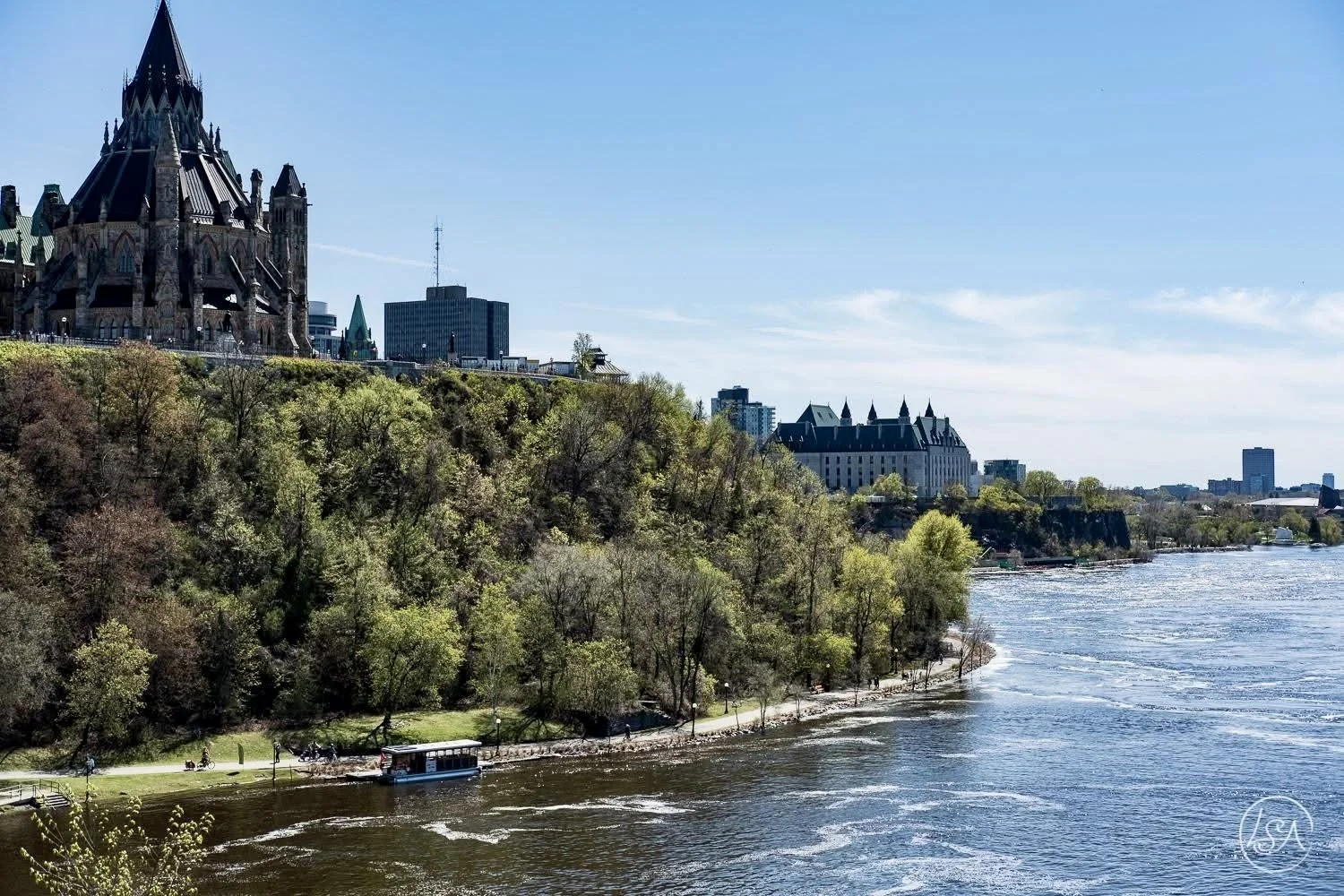
Ottawa, Parliament Buildings
The photograph showed the White House torn open.
Its familiar columns still held their place against the Washington sky, but the East Wing had been pulled apart, its rooms exposed to weather and its edges raw around the machinery below. Somewhere beneath the rubble was the Jacqueline Kennedy Garden.
A ballroom is going there.
Perhaps I respond this way because I am a photographer. I take in the world through my eyes: light moving through leaves, stone darkened by rain, a small figure crossing an open field. I notice when a building settles into the landscape as though it belongs there, and when it seems to stand against everything around it.
In my photographs, people are often tiny. I place them inside vast landscapes until they resemble ants, not because I believe we are insignificant, but because we sometimes need our proportions corrected. An ant belongs to a society beneath our feet, building, carrying, communicating and surviving through collaboration.
One ant is small. Together, ants can move earth.
The White House has stood in one form or another since 1800. Presidents arrive, place their hands on its banisters, look through its windows, make decisions in its rooms, and leave. The building remains because no temporary occupant is supposed to confuse residence with ownership.
The East Wing is gone.
Trump’s new ballroom will glitter with columns, gilded ceilings and gold presidential seals. Nearby, if his plans proceed, a 250-foot triumphal arch will rise between the Lincoln Memorial and Arlington National Cemetery, taller than the Arc de Triomphe in Paris and crowned with a gilded figure.
The original Arc de Triomphe took thirty years to build. Time changed its meaning. Beneath it now lies the Tomb of the Unknown Soldier, where an eternal flame shifts our gaze away from emperors and victories toward the countless dead whose names disappeared into war.
Architecture can outlive the reason it was built. It can gather memory, absorb grief and become part of the story a people tells about itself.
It can also become a costume.
Columns rise. Gold multiplies. Rooms expand until the person entering them is meant to feel small. The borrowed language of empire becomes branding, a way for one man to place himself inside history before history has decided what to do with him.
Outside, a garden follows another clock.
Roots work beneath the soil without an audience. Rain gathers on leaves. Insects carry pollen from one flower to another. A tree planted by someone long dead offers shade to a stranger whose name the planter could never have known. Soil, water, decay and human hands all participate, and no single hand can claim the result.
The ballroom wants credit.
That hunger to possess does not stop at the edge of a building. Last night, Trump posted an altered map of North America and the surrounding region, with the Stars and Stripes laid across Canada, Greenland, Mexico, parts of Central America and the Caribbean. Borders disappeared beneath the flag. Entire countries were absorbed as easily as changing the colour of a shape on a screen.
A map can make conquest look clean.
Real life refuses.
Beneath those erased borders are rivers, communities, families and economies that have grown around one another for generations. A Bombardier aircraft may carry a Canadian name, but American hands build parts of it in Texas and California. The company employs about 3,500 people in the United States and works with approximately 2,800 American suppliers. When Trump threatens to block Bombardier from the American market, the damage does not stop politely at the border.
Neither do tariffs. A shipment crosses into the United States, where the American importer pays the duty to U.S. Customs. Most of that revenue enters the Treasury’s general fund, to be appropriated by Congress and administered through government spending. Once the payment joins that enormous pool, its individual trail ends.
Farther along, a price rises. An order disappears. A worker wonders whether there will still be a shift next month.
The map and the tariff share a fiction: that countries are sealed containers and power can strike one without touching another. But families cross borders. Rivers cross them. Smoke from burning forests moves with the wind, and firefighters travel in the other direction.
This summer, firefighters came to Canada from around the world to protect communities they had never seen. Canadians have crossed oceans to do the same. They arrive carrying equipment, training and the understanding that when a house is burning, neighbours bring water.
September 11 is approaching, and in Newfoundland the memory of Gander remains close. When thousands of airline passengers were stranded there in 2001, people opened schools and community halls, made beds, prepared food, cared for animals and brought strangers home.
They did not send a bill.
I grew up beside an America that asked, “Won’t you be my neighbour?” Fred Rogers spoke to children about fear, kindness and the person living beside them. Sesame Street imagined a neighbourhood where people of different backgrounds and temperaments shared the same block, learned from one another and belonged.
That America still exists in firefighters who cross the border when our forests burn, in teachers and nurses, in workers who organize, and in citizens protecting neighbours whom others have taught them to fear.
Another America now speaks through the presidency, covering neighbouring countries with its flag and asking citizens to mistake domination for strength. Artificial intelligence can produce the image in seconds and carry it into millions of minds before truth has found its shoes.
How will Americans reconcile the neighbour they were taught to become with the empire they are being asked to accept?
That question belongs to them. Our answer belongs to us.
Canada is not perfect. Housing and food have become painfully expensive. Our health-care system is strained. The pandemic left isolation and mistrust in its wake, and there are injustices here that cannot be hidden beneath a maple leaf. Still, we must decide what kind of strength we intend to build.
On Labour Day, Prime Minister Mark Carney spoke about unions and the better pay, safer workplaces, pensions, benefits and paid leave they helped workers achieve.
“It is not just what we build,” he said, “but how we build.”
Above us, geese are already moving south. On migration maps, thousands upon thousands of birds become colour flowing across the continent, following winds and routes older than Canada or the United States. Beneath them, we raise tariffs, draw borders, threaten neighbours and build monuments to our own importance.
Modern humans have existed for roughly 300,000 years, a flicker in the life of the Earth. Ocean currents carry heat around the planet. Winds move weather, seeds and smoke. Roots hold the soil beneath buildings whose occupants imagine themselves permanent.
The birds keep moving.
Trump wants to occupy the whole frame, but he is one human being inside one administration, living through one brief moment in the long movement of the world. He can do enormous damage because enormous power has gathered around him. Small does not mean harmless.
It does not mean powerless either.
Ants build societies. Geese cross continents. Workers organize. Countries make alliances. People open their doors to strangers. We survive by remembering that strength does not always stand alone.
The gloves are off, but our values are not.
Canada can defend its sovereignty without treating ordinary Americans as enemies. We can become less dependent on the United States while strengthening relationships across provinces, languages and oceans. We can resist authoritarianism without allowing it to remake us in its own image.
A ballroom may glitter for a season. Beyond its walls, roots continue their dark work. Water moves. People gather. Birds cross the altered map.
A monument tries to make one ruler permanent.
A garden knows better.